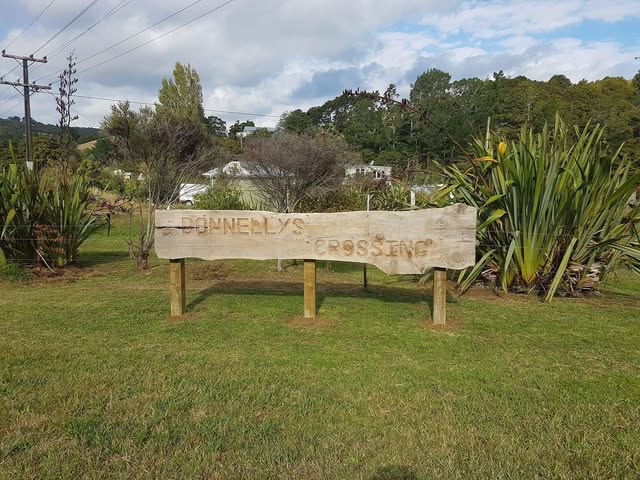
The Garden Scaffold
What the garden is — what it is for, who it is for, and what it is not.
Draft — written 8 September 2026, not yet agreed
The garden in one sentence
A garden for ourselves that feeds us, feeds our connections to the land, our connections to each other, and our connections to our wider communities.
Purpose of the scaffold
The other scaffolds answer how the garden runs. This one answers what the garden is — what it is for, who it is for, and what it is not.
It is written so that three audiences can read the same document: the working group who agree it, the community it belongs to, and the funders and partners who ask what they have backed.
Why this matters
A project that cannot say what it is gets told what it is by whoever is watching. The stakeholders are — a fund with its own purpose and goals, a community group that is becoming resilient, and a grant culture.
Saying what the garden is, in the community's own words, before the first bed goes in, is what lets everyone stay on track and share one vision.
Outcomes of the scaffold
- Poor
- The garden's account of itself comes from different, unrelated sources — the grant application, different members of the community or the reporting form. Ask three people what it is for and you get three different answers. The food stand is described as helping families in need.
- Expected
- The group can say what the garden is without reaching for the funding language. When something contested comes up, this document is the yard stick by which decisions are measured.
- Excellent
- A stranger walking onto the Uey works out what the place is from the place itself — the board, the beds, the kids' plot, the fact that nobody appears to be in charge. The document only confirms what the garden already says.
Planks of the scaffold
-
1. Food is the reason to gather
Purpose of the plank. Donnellys Crossing holds decades of knowledge sitting still in separate households — growing, preserving, cooking, building, woodwork, engineering, farming. The garden is the reason to bring it into one place. Children work a plot of their own alongside people who have gardened for forty years. The local school is invited into it. The annual picnic sports day, quiet for a couple of years, comes back to the gardens.
Why this matters. On the surface this is a community garden. Underneath it is a small remote community cooperating, regenerating, learning. Food is what gets people to turn up.
- Poor
- The garden becomes a task list with a roster. Knowledge stays where it was. The children's plot is tended by adults.
- Expected
- Working bees are where the teaching happens. The kids' plot is genuinely the children's. The picnic sports day returns and is mostly a day for them.
- Excellent
- The knowledge moves — someone who could not grow a thing in 2026 is teaching it in 2030 — and the gathering outgrows the garden that started it.
-
2. The garden is food in reach, on common ground, in the middle of the village
Purpose of the plank. The garden sits on the Uey in the heart of Donnellys Crossing. On it: six raised beds, an orchard of fruit trees and cold-hardy bananas, a plot for the children, a community food stand, and signage. Everything grown is spray-free. Everything on the stand is free.
Why this matters. The nearest supermarket is half an hour away, and fuel costs as much as the shopping. Food security here is a distance-and-cost problem. Beds in the middle of the village are part of the solution.
- Poor
- The garden ends up wherever was convenient to build. It becomes a plot that some people keep, which others may visit.
- Expected
- Beds, orchard, kids' plot and stand are on the Uey. Anyone can walk up and take kai without arranging it first.
- Excellent
- Walking onto the Uey and taking what you need is unremarkable, the sort of thing nobody comments on.
-
3. The garden belongs to everyone, nobody runs it
Purpose of the plank. The non-operator norm governs the garden. The Head Gardeners tend within their specialisations; they do not operate the place. No one runs the food stand — when it is low, we ask everyone, not a particular person. Working bees are irregular, when needed and not on a standing day. Forty minutes is a full contribution.
Why this matters. In most systems, the reliable, capable person quietly becomes responsible, and everyone else becomes a helper, or worse, a recipient. Refusing to have an operator is what keeps this common ground rather than someone's project.
- Poor
- One person does most of it, is thanked for it, and the garden becomes theirs by default. Others start asking permission.
- Expected
- Work is spread and irregular. The stand has no keeper. Head Gardeners hold knowledge, not authority over the place.
- Excellent
- A newcomer cannot work out who is in charge, because no one is, and the garden still runs.
-
4. It is not charity, and no one here is a case
Purpose of the plank. The food stand carries the six locked sentences of board-text — the promise, the refusal, the standing sentence, and the three rules — unchanged. Nothing records who took or who gave. Working bee attendance is not kept. Fuel receipts exist only because the grant requires them, and stay private to the claimant, the Fuel/Spend Tracker and the Treasurer.
Why this matters. A stand that keeps track turns neighbours into recipients and generosity into a register. Some households here stretch what they have a long way; none of them are a case to be managed. The architecture avoids the data by not collecting it.
- Poor
- The stand acquires a story about who it is for. Contribution becomes conversation — who brought what, who only takes.
- Expected
- The board says what the stand is. Reporting stays aggregate. Nobody can find out who used it.
- Excellent
- Someone who wants to make an accusation about a neighbour's taking or giving can be told, honestly, that we do not have that information.
-
5. It grows in relationship with mana whenua, at the relationship's pace
Purpose of the plank. The kaupapa rests on the blessing of Matua Snow Tane of Te Roroa; direct iwi-level contact stays with the Chair. Waikarā Marae, three years ahead of us with their papakāinga gardens, is a learning relationship, held by the Marae Liaison — the asymmetry is acknowledged, not flattened into partnership. The school is invited, not pursued. None of these relationships is a project deliverable but contribute to the overall vision of the community.
Why this matters. Waikarā's counsel has already changed the build: we planned timber beds, and were told plainly that timber rots in Northland. We changed to steel. The seeds for forging close relationships with our wider community are grown in this garden.
- Poor
- The relationships get pulled along by the build schedule. Visits become deliverables. Snow Tane's blessing is cited as ongoing endorsement in reports.
- Expected
- The Marae Liaison holds practical contact. Visits happen when there is something to share back.
- Excellent
- The relationships outlast this project and grow into other projects and initiatives.
-
6. It is built to outlast the grant, and the people who built it
Purpose of the plank. The Kai Ora grant buys materials, not the garden. What was chosen was chosen for length of life: steel beds rather than timber; an orchard and a banana grove that suckers and spreads; seed saved and returned rather than bought each year; mulch gathered locally. In 20 years time, the garden is still providing.
Why this matters. The stress will arrive around year two, when the money is spent and the first enthusiasm has gone. A garden designed around funding ends when the funding does. This one is designed for a horizon longer than the people building it.
- Poor
- Year two is spent looking for the next grant. The question becomes what is fundable rather than what the garden needs.
- Expected
- The sustainability walk happens at the AGM. A quiet year is read as a quiet year, not a failure.
- Excellent
- The beds are still there, and still full, when the people who put them together are not.
What the garden is not
- Not DCCG's credibility moment. The application said it was. That was true of the application, not of the garden.
- Not a service delivered to people in need. There are no clients, no eligibility, and no one keeping a list.
- Not a measure of anyone's contribution. No attendance, no ledger, no leaderboard of giving.
- Not the point of the relationships. Te Roroa, Waikarā and the school are not outputs of a garden project.
- Not a schedule. No standing Saturday, no stocking rota, no year-round guarantee of a full shelf.
Values
- Common ground — it belongs to everyone, so no one gets to operate it.
- Food without account — nothing is recorded about who took or who gave.
- The long horizon — built for decades, not for the grant term.
This scaffold says what the garden is. The role scaffolds on the Uey Kai Garden page say how it runs, and our Kai Ora application says how the materials are paid for.